
Alternate Side
Amy Sillman's artistic practice mirrors transformative leadership at the edge of uncertainty

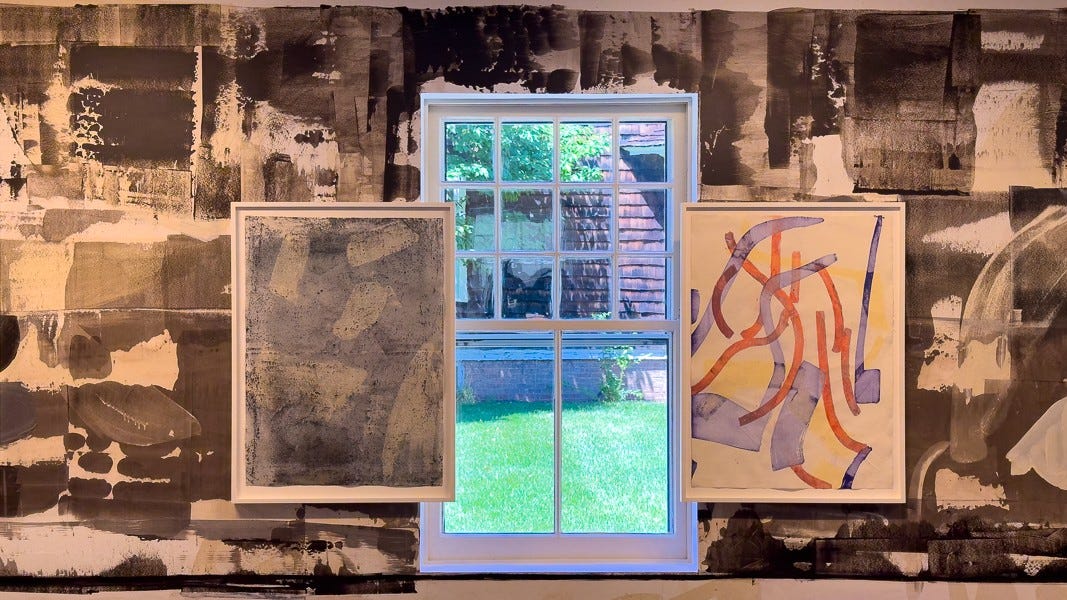
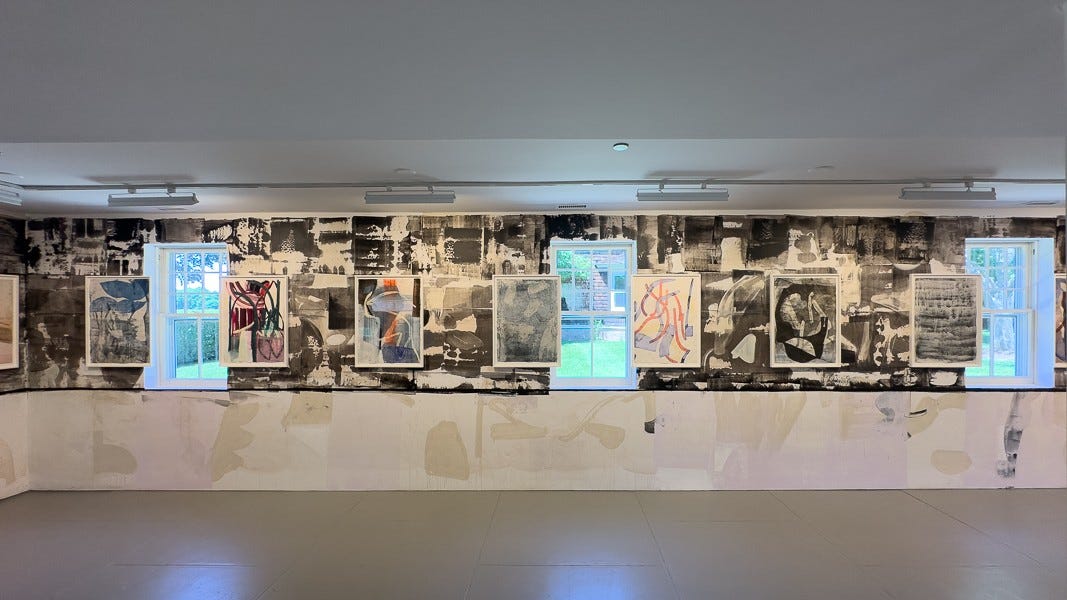
This weekend I was fortunate to tag along on an art tour to the Dia Bridgehampton exhibition of Amy Sillman's "Alternate Side." The installation filled the entire single room of the museum that had formerly been a Baptist Church, where the artist easily moved from framed monotypes to painting directly on the walls themselves - working without a fixed plan, at what she called "an affective edge where things can't be conclusive." As I stood in that transformed sacred space, watching how light filtered through partially obscured windows to float across her improvisational marks, I found myself reflecting on how her artistic practice mirrors the most profound aspects of leadership. Three insights emerged: the power of embracing process over product, the transformative potential of dismantling hierarchies through "figure-on-figure" relationships, and the creative tension between improvisation and structure.
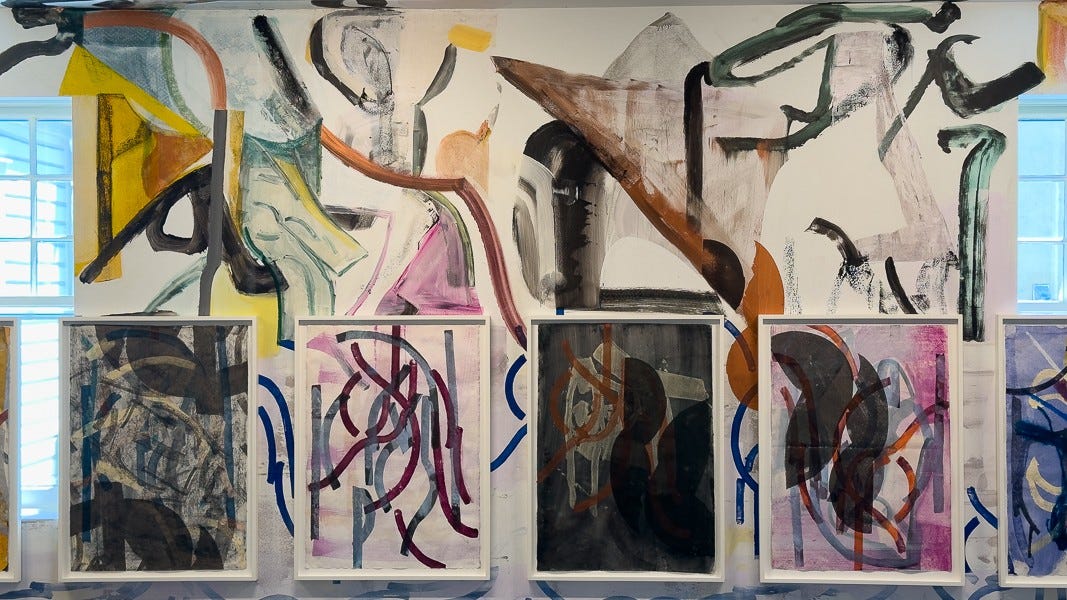
The first insight struck me as I learned about Sillman's approach - she "privileges fluid process over fixed output," refusing to sketch or plan her wall paintings in advance. This challenges our outcome-obsessed business culture where leaders are expected to present predetermined goals and drive teams toward specific endpoints. Yet what if we created environments where the process of discovery itself generates value? Sillman arrived at Dia with 32 selected prints but no plan for the wall painting that would surround them. She worked intuitively, responding to the space, allowing forms to emerge through layers of paint and silkscreen ink. Similarly, leaders who cultivate comfort with ambiguity and trust in emergent processes often discover solutions far more innovative than any predetermined strategy could yield. This requires tremendous courage - to begin without knowing the destination, to trust that meaningful patterns will emerge from authentic engagement with challenges.
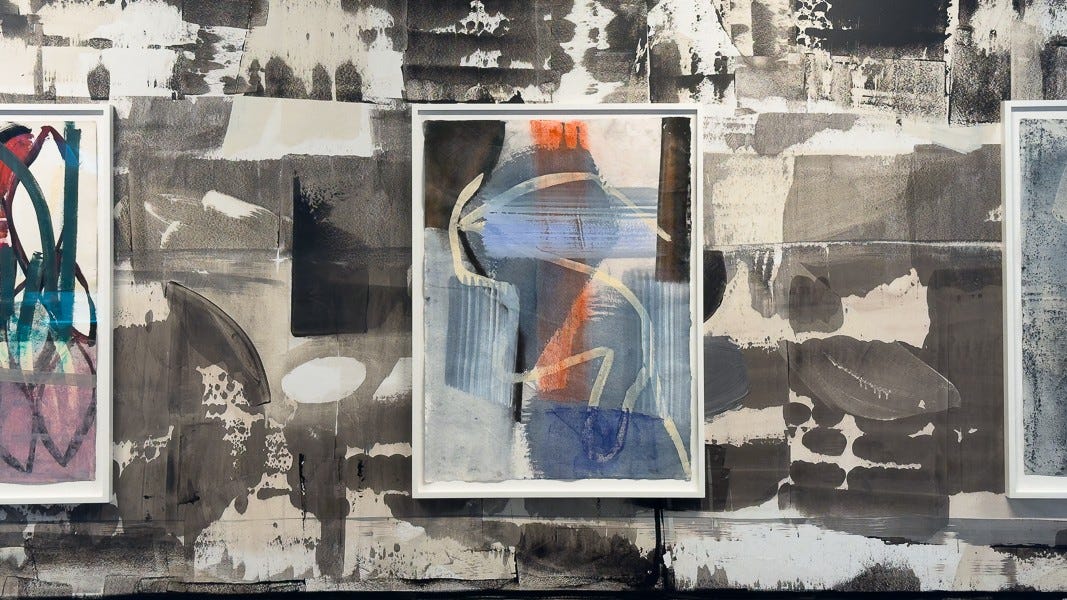
Her revolutionary concept of "figure-on-figure" relationships, as opposed to traditional "figure-ground" hierarchies, offers a profound reframe for organizational dynamics. In conventional art, figures stand out against passive backgrounds. Sillman disrupts this by creating what she calls "ground-on-ground" - where every element carries equal weight and significance. Imagine applying this to our teams: instead of leaders as figures directing teams as background, everyone contributes substantive content. No one merely provides support while others generate ideas. This isn't about eliminating structure but about recognizing that innovation emerges when we honor each person's capacity to be both figure and ground. In practical terms, this might mean rotating meeting leadership, distributing decision-making authority, or creating project structures where expertise, not hierarchy, determines influence.
Perhaps most compelling is how Sillman balances "improvisational and systematic" approaches. She works within "characteristic, self-imposed limitations" - a defined vocabulary of symbols including trembling vertical lines and almond-shaped palms that recur throughout her work. These constraints don't restrict creativity; they enable it. Like a jazz musician working within musical structures to find freedom, Sillman shows how boundaries can liberate rather than confine. She describes printmaking as "digital" (allowing one to save, undo, repeat) while painting is "analog" (less forgiving, more permanent). Leaders can learn to toggle between these modes - knowing when to experiment freely and when to commit irreversibly. The key is creating robust frameworks that support rather than constrain creative problem-solving, allowing teams to respond authentically to emerging conditions while maintaining coherence.
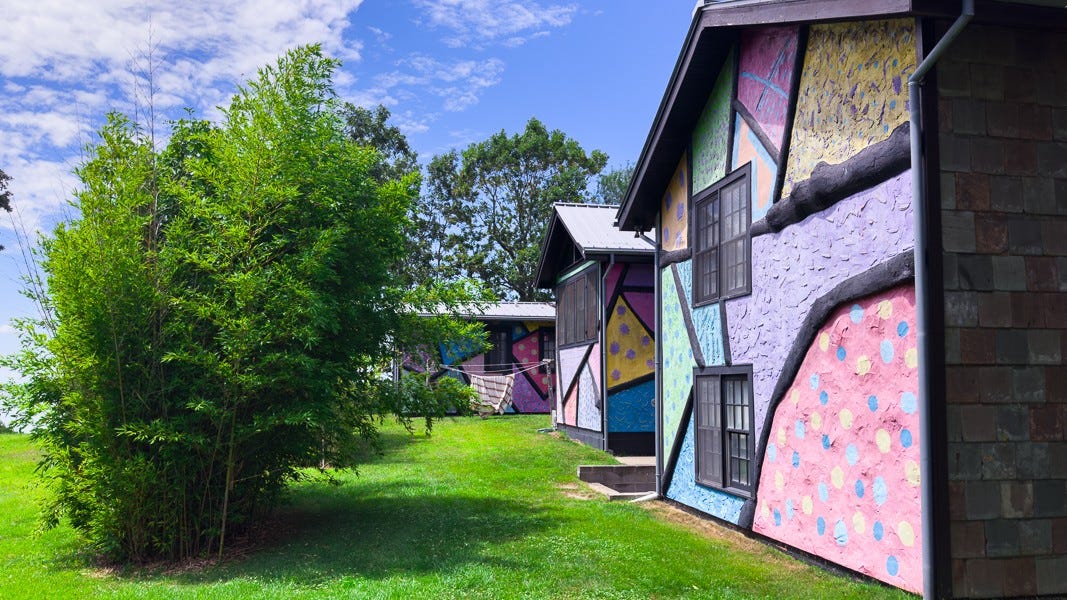
In life and leadership, standing in that transformed church space reminded me that leading at the edge requires embracing uncertainty as a creative force. Sillman's installation will eventually be painted over, acknowledging the impermanence that underlies all our efforts. Yet this temporality doesn't diminish its power - if anything, it intensifies the work's impact. Time and light continually alter the installation, just as context and conditions constantly reshape our organizations. For those we lead and love, our willingness to work at this "affective edge" - where outcomes remain inconclusive but possibilities abound - models a different kind of strength. It's not the brittle confidence of false certainty but the flexible resilience of those who trust in process, dismantle hierarchies to unleash collective creativity, and find freedom within thoughtfully chosen constraints. Like Sillman's work, our leadership can be "fixed in space but not finished" - grounded in values while remaining perpetually open to transformation.

With love, gratitude, and wonder,
Scott

LEADERSHIP LESSONS FROM A KITCHEN: WHAT THE BEAR'S "FORKS" TAUGHT ME ABOUT EXCELLENCE by Ayse (Eye-Shay) Birsel
Ayse Birsel recently shared her insights about leadership lessons gleaned from watching "The Bear," specifically the "Forks" episode from Season 2. She was particularly struck by Coach K's opening monologue about leadership fundamentals, including the importance of changing limits to improve, learning from failure, surrounding yourself with good people, and focusing on solutions rather than excuses. Ayse connects this to her belief that we're all leaders of our own lives, making Coach K's reflection about "what an interesting life it is to be a leader" universally applicable.
The episode inspired Ayse to compile eleven leadership lessons, ranging from finding meaning in mundane work to the importance of showing up even during personal crises. Her favorite insight comes from a scene where a character explains his passion for the restaurant industry, emphasizing how "stoked" both staff and customers should be about the experience they're sharing. Ayse frames her newsletter as merely providing the "ingredients list" for these leadership concepts, encouraging readers to watch the actual episode for the full transformative experience.
New Research on the Link Between Learning and Innovation by Jean-François Harvey, Johnathan Cromwell , Kevin J. Johnson and AMY C. Edmondson

Jean-François Harvey, Johnathan Cromwell, Kevin Johnson, and Amy Edmondson, recently published fascinating research on how teams can innovate more effectively through structured learning. Their study of over 160 teams revealed that successful innovation depends not just on how much teams learn, but crucially on when and in what order they engage in different types of learning activities.
The research identifies four essential learning behaviors: experimental (testing ideas through brainstorming and prototyping), vicarious (consulting others who've done similar work), contextual (scanning for market trends), and reflexive (self-examination and strategy assessment). The key finding is that mixing incompatible activities—like trying to brainstorm wildly while simultaneously doing detailed planning—creates confusion and stalls progress. Instead, high-performing teams separate these activities into distinct phases, creating a predictable rhythm that alternates between exploration and reflection. This structured approach, which Harvey and his team liken to a musical composition with moments of tension and resolution, transforms chaotic innovation efforts into strategic clarity and sustained competitive advantage.
From Toys to Toons by Andrew Asch

Pooneh Mohajer, co-founder and CEO of West Adams-based Tokidoki and member of the first cohort of the 100 Coaches Community, has built an impressive lifestyle brand over the past 20 years. Starting in 2005 with anime-inspired characters, her company gained prominence through an unexpectedly successful collaboration with LeSportsac that lasted 11 seasons. This breakthrough led to partnerships with major brands including Marvel, MLB, Hello Kitty, and Sephora. Recently, Tokidoki ventured into animation with "Mermicorno: Starfall" on HBO Max, marking their 20th anniversary.
Throughout her entrepreneurial journey, Pooneh has faced numerous challenges, including the 2008 economic downturn and current tariff issues, yet remained committed to organic growth rather than becoming a fleeting trend. She attributes Tokidoki's longevity to staying true to their vision and building emotional connections between fans and characters. Drawing inspiration from her immigrant parents—particularly her father, a 91-year-old physician and inventor with 21 patents—she emphasizes the importance of networking through organizations like the Entrepreneurs' Organization. When asked about regrets, she wishes she'd been less hard on herself, noting she now has confidence in her problem-solving abilities.