
Culinary School
What exceptional service teaches about building lasting leadership legacy


Last week, after the Thinkers50 conference concluded in London, a small group of us gathered for dinner. Marshall Goldsmith asked Alex Lazarus MSc, CBPto secure a table for seven at Hélène Darroze at The Connaught, a three-Michelin-star restaurant that typically requires months of advance booking. Astonishingly, a table opened at 8pm, and we found ourselves experiencing one of London’s finest culinary achievements. Marshall shared the story of his first Michelin-starred meal and the profound impression it made on him—particularly how he arrived professing his lack of knowledge and willingness to learn, and the staff responded with extraordinary generosity and attention. The meal itself was sublime, the wine pairings magnificent, but what struck us most deeply was something else entirely. As Oleg, the captain of our service team, said at evening’s end: “We hope this meal pleased you.” In those simple words, delivered with genuine humility, we heard something profound about leadership and legacy. The excellence we experienced that night emerged from three interwoven commitments: a dedication to perfection in the smallest details, taking genuine pleasure in the process itself, and serving exceptional quality with authentic humility.
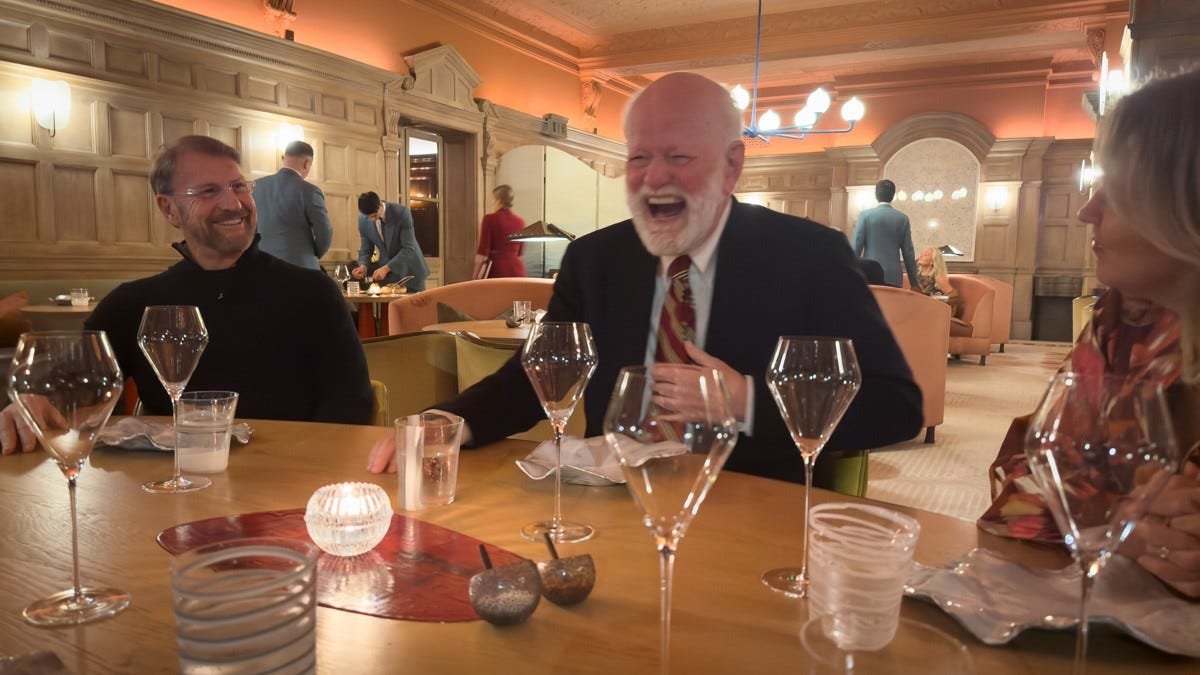
The commitment to perfection in details reveals something essential about how lasting impact is created. Throughout our meal, every element reflected years of refinement and attention. This wasn’t about rigid control but rather about creating the conditions for something extraordinary to emerge. The kitchen staff and service team had spent countless hours perfecting their craft, not for recognition but because the work demanded it. As leaders, we often focus on grand strategies and major initiatives, but transformational impact is built through sustained attention to the fundamentals. The decisions we make about how we communicate, how we recognize contributions, and how we handle disappointments are the seemingly small choices that compound over time and create cultures that either flourish or diminish. When we invest in getting the details right, we’re not just improving immediate outcomes; we’re establishing patterns that will shape how others lead long after we’ve moved on.

Taking pleasure in the process transforms work from obligation into art. Throughout the evening, every member of the team genuinely loved what they were doing. Their enjoyment wasn’t dependent on our praise or appreciation; it came from their relationship with excellence. They had found meaning in the work itself, in the continuous pursuit of mastery, and the opportunity to create something beautiful. As leaders, we can ask: Are we creating environments where people can find this kind of fulfillment? Are we helping those we work with discover the intrinsic rewards, or are we only offering external motivations? When people find genuine pleasure in their work, they naturally invest more deeply, persist through difficulties, and inspire others through their example. This quality of engagement creates ripples that extend far beyond any single project or initiative.
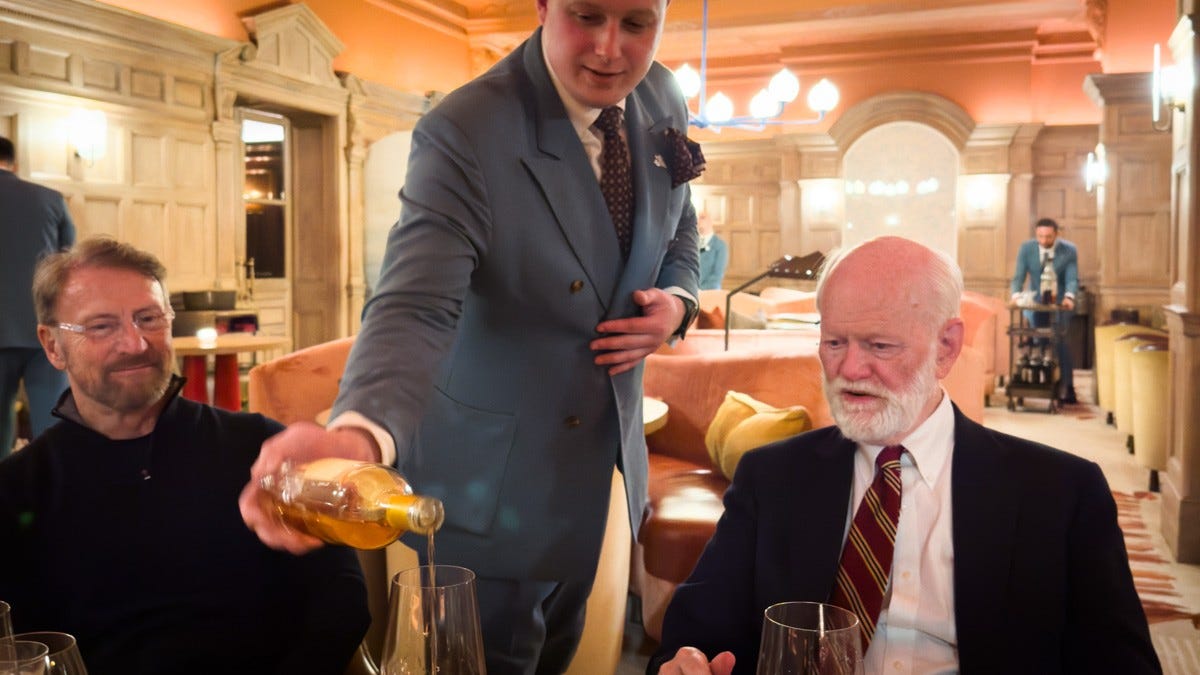
Serving exceptional excellence with humility creates the conditions for generational impact. What made Oleg’s simple statement so powerful was its complete lack of pretension. Despite delivering one of the finest dining experiences in the world, he and his team remained focused entirely on our experience rather than their accomplishment. This humility created space for connection and made the excellence feel like a gift rather than a performance. Delivering exceptional results while maintaining authentic humility determines whether our work creates lasting positive change or merely temporary success. When we serve with humility, we recognize that today’s excellence creates tomorrow’s foundation, and that the cultures we build will shape leaders we may never meet.
In life and leadership, the question isn’t just whether we’re successful today but whether we’re creating the conditions for flourishing that extends beyond our tenure, our organizations, and even our lifetime. The team at Hélène Darroze isn’t just preparing meals; they’re establishing standards of excellence, training the next generation of culinary artists, and demonstrating what becomes possible through unwavering commitment to craft. Our work as leaders flows forward in ways we cannot fully see or control. By attending to details with care, finding joy in the process, and serving with humility, we plant seeds that may flower in worlds we’ll never witness. For those we love and lead, this is perhaps our profound responsibility, not just to create success in our own time, but to build foundations that enable future generations to flourish in theirs.

With love, gratitude, and wonder,
Scott

Leadership Lesson: Michelle Johnston’s Seismic Shift

Michelle Johnston, Ph.D. , executive coach and 100 Coaches member, partnered with Marshall Goldsmith to identify a fundamental truth reshaping executive leadership: connection has replaced power as the currency of success. Their research reveals that command-and-control leadership models are becoming obsolete in our transformed workplace reality.
Johnston’s “Seismic Shift” framework challenges senior executives to recognize that effective leadership development now requires mastering three critical connections—with yourself, your team, and your organization. This isn’t soft leadership. These are hard skills that generate hard results.
The most actionable insight? Leaders who consciously understand that connection matters still don’t necessarily know how or what to do. Johnston’s work demonstrates that authentic leadership transformation begins with intentional self-awareness, extends through genuine team engagement, and culminates in organizational alignment. For Fortune 500 executives navigating remote work and cultural transformation, this shift from transactional to relational leadership directly impacts executive performance and business outcomes.
The seismic shift facing C-suite leaders today: your ability to connect now defines your ultimate success.
Leaders Can Move Fast and Fix Things by Frances Frei and Anne Morriss

Frances Frei and Anne Morriss challenge a dangerous assumption in their latest HBR article: that speed and care are incompatible in organizational change. They demonstrate that the most successful corporate turnarounds—from Alan Mulally at Ford to Satya Nadella at Microsoft—prove you can move fast while taking full responsibility for customers, employees, and shareholders. The “move fast and break things” mentality creates unnecessary wreckage that leaders spend years cleaning up.
Before accelerating major transformation initiatives, Frei and Morriss recommend “earning the right to run” through four critical steps. First, ensure you’re solving root causes, not symptoms—using approaches like Toyota’s Five Whys. Second, build trust through logic, authenticity, and empathy, as Uber did during its turnaround. Third, involve domain experts beyond your familiar network who understand the challenges deeply. Finally, tell a compelling story about where you’re leading people, as Mulally did with his “One Ford” plan. Their key insight? These steps actually increase speed by reducing friction and costly rework.
Leading in the Flow of Work by Hitendra Wadhwa

My friend Hitendra Wadhwa’s Harvard Business Review article challenges conventional leadership development by introducing a breakthrough approach: leadership-in-flow. Instead of viewing leadership as competencies to master through extensive training, Wadhwa demonstrates that exceptional leadership is actually a state we activate by tapping into five core energies—Purpose, Wisdom, Growth, Love, and Self-realization. His research with over 100 executives across diverse industries revealed that leaders achieved a 135% improvement in performance outcomes within just six weeks, using simple actions that take seconds to execute before critical moments.
What resonates most for senior leaders at organizations generating over $500 million in revenue is the practical application. With merely 10-15 minutes of intentional preparation before pivotal events—board presentations, strategic negotiations, transformation initiatives—executives can access their inner core and respond with remarkable agility. Wadhwa’s framework of 25 specific actions provides a structured yet flexible playbook for navigating high-stakes situations where traditional leadership competencies often fall short under real-time pressure.