
Living Intention
The Essential Tension Between Present Performance and Future Flourishing


This past week, I sat in the audience as Krista Tippett and Rabbi Shai Held explored questions of faith, love, and responsibility. The conversation ranged widely, but one topic caught my attention in particular: the tension between our specific obligations to those closest to us and our universal responsibilities to wider humanity. Rather than flattening this tension through utilitarian calculation or retreating into comfortable tribalism, Rabbi Held insisted we are capable of holding both commitments simultaneously. This struck me as more than theological wisdom—it represents a fundamental challenge every leader faces. We must care deeply for our teams and organizations while never losing sight of broader responsibilities to communities we may never meet and futures we won’t inhabit. Three insights emerged about how leaders navigate this essential tension: we must resist the false choice between proximity and possibility, we create conditions for flourishing that ripple beyond our direct influence, and we learn to apportion finite resources while honoring infinite worth.

Leaders face the temptation of believing we must choose between loving our own and caring for the world. Rabbi Held called this the trap of utilitarian flattening on one side and complacent parochialism on the other. In leadership, we see this when executives claim they can focus only on shareholder value, or when managers insist that caring for their team means ignoring systemic inequities. But effective leaders refuse this false binary. They invest in their team’s growth while considering how their decisions affect communities downstream and generations ahead. They ask both “How does this serve those I lead directly?” and “How does this contribute to the greater system?” This dual commitment isn’t comfortable—it requires holding contradictions, acknowledging limits, and making difficult trade-offs. Yet this willingness to carry complexity distinguishes leadership from mere management. When we love our immediate circle fiercely while maintaining expansive vision, we model that human capacity is larger than we typically imagine.

We naturally focus on measurable outcomes—quarterly results, annual goals, strategic plans—with defined endpoints. Yet the most consequential leadership operates on timescales that exceed our yearly reports. When we build intentional cultures where people bring their fullest selves, when we invest in developing others beyond immediate needs, when we create systems that distribute opportunity more equitably, we’re planting seeds for harvests in years to come. This isn’t altruism; it’s about understanding that leadership means accepting responsibility for consequences that extend beyond the present situation. The resources we control—time, attention, capital, opportunity—are finite. How we allocate them signals what we value and who we believe matters. Every budget reflects a moral statement. Every promotion reveals commitments. Strategic choice shapes our organization and the ecosystem we inhabit. Leaders who grasp this think about foundation before legacy, building structures that support flourishing for the long term.

We must communicate values clearly while holding convictions humbly. A world that is quick to vilify people with differing beliefs, demands a leadership response beyond simple judgment. It means being able to understand without condoning, to engage without compromising, to hold people accountable while remaining curious. Leaders set direction, establish boundaries, and make decisions affecting lives based on clearly articulated principles, consistently applied. Effective leadership also requires acknowledging that we see through our own lenses, that our certainties might be someone else’s questions, and that even our best intentions can produce unintended consequences. This isn’t relativism; it’s recognizing that moral seriousness demands both conviction and humility. We can stand firmly for our ideas while remaining genuinely interested in understanding those who see differently, acknowledging that this very tension often produces the most creative solutions.

In life and leadership, the hardest geometry isn’t the math of resource allocation or strategic planning—it’s learning to hold multiple circles of obligation without collapsing them into one. When we lead with both particular love for those we lead and universal responsibility for those farther from our center, we participate in something larger than quarterly performance. We become architects of possibility, creating conditions where people can flourish today while building foundations that support future growth. Our teams and the world aren’t separate projects; they are interwoven responsibilities. Leaders who master this geometry don’t seek to eliminate the tension—they inhabit it, discovering that the friction between proximity and possibility generates a heat that forges transformative work.

With love, gratitude and wonder,
Scott

Lessons From Coaching Icons: Tasha Eurich on Becoming Shatterproof
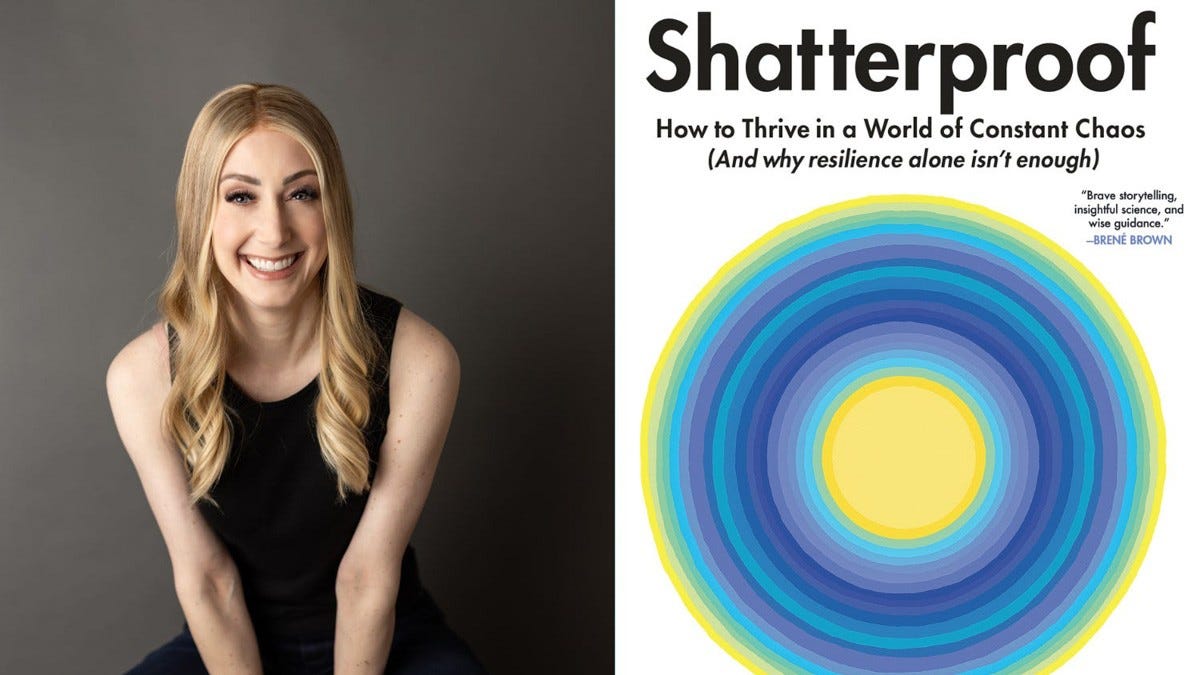
Most senior executives understand resilience—it’s helped you survive countless market disruptions and organizational challenges. But organizational psychologist Tasha Eurich pushes us beyond survival with her Shatterproof concept.
In her transformative book, Eurich distinguishes between resilience and being Shatterproof. Resilience helps us endure and bounce back. Being Shatterproof transforms adversity into a competitive advantage through executive leadership development. It’s the critical mindset shift from “I’ll survive this crisis” to “I’ll emerge stronger because of it.”
This reframe is essential for Fortune 500 executive coaching. When C-suite leaders embrace Shatterproof thinking, setbacks become catalysts for growth. Failed initiatives, leadership transitions, strategic pivots—these don’t just test your executive performance, they forge it.
Eurich’s insight resonates deeply in leadership development: those cracks in your experience don’t diminish your capacity for senior executive development—they expand it. The most impactful leaders don’t simply weather storms; they harness them for breakthrough transformation.
Because you’re worth more than just getting by.
What recent challenge has revealed your greatest leadership growth?
Great Leaders Empower Strategic Decision-Making Across the Organization by Bill Flynn

Bill Flynn recently published a compelling piece in HBR that addresses a challenge we see frequently in our work with senior executives: the critical transition from heroic individual contributor to organizational systems architect. Flynn identifies a dangerous inflection point where the very leadership traits that propelled executives to success—rapid decision-making, personal problem-solving, driving outcomes through sheer will—become organizational bottlenecks when growing complexity and scale demand truly distributed leadership capability.
Flynn outlines a practical four-step framework for building strategic decision-making capacity across your leadership team: establishing monthly customer intelligence briefings to democratize market insight beyond the C-suite, implementing decision matrices that codify strategic priorities and evaluation criteria, creating peer-driven learning rhythms through structured after-action reviews, and systematically tracking decision independence over time. His case study demonstrates how one leader shifted from approving every strategic choice to designing systems that enabled her team to evaluate opportunities autonomously. The result? Major initiatives scored, decided, and implemented without leadership bottlenecks, while maintaining strategic alignment and accelerating organizational momentum.
The secret to success with transformational M&A? It’s the people
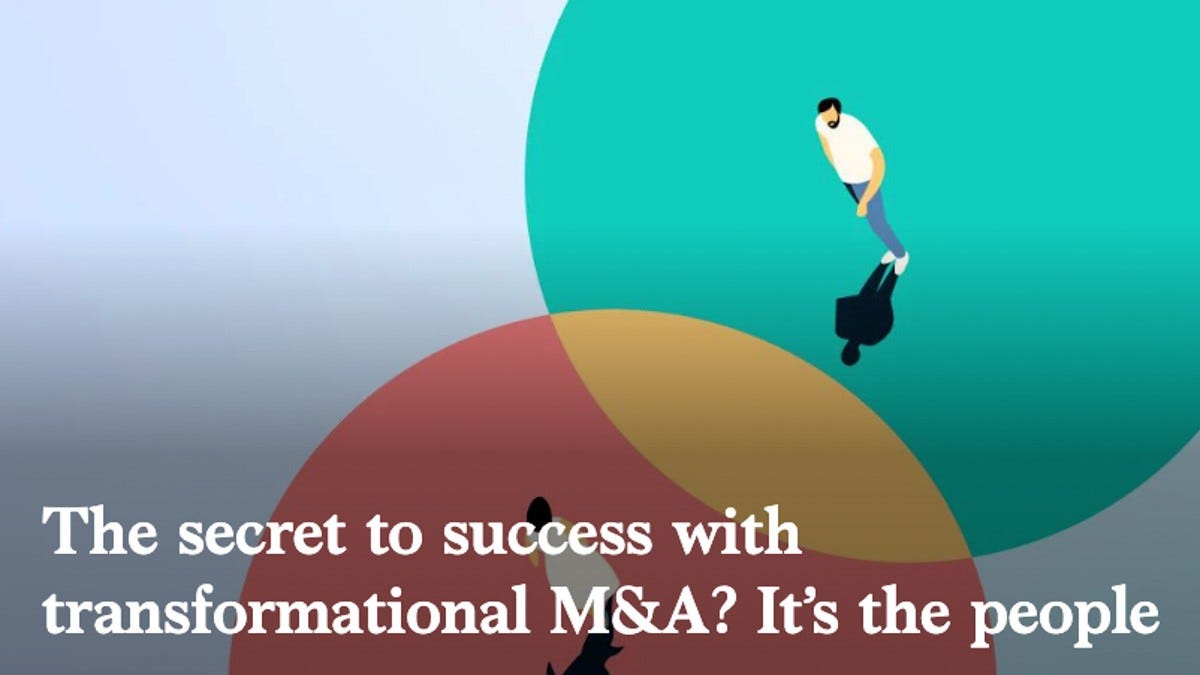
Alex Liu , Christopher Hagedorn , and Kevin Van Ingelgem of McKinsey published compelling research on why M&A transformations miss their mark. The answer isn’t strategy or execution alone. It’s people.
Their analysis reveals CEOs who prioritize talent, capabilities, and culture early in post-merger integration dramatically improve transformation outcomes. One packaging merger generated over $1 billion in shareholder value with 45% EBITDA uplift—primarily because leadership conducted comprehensive talent diagnostics, invested in capability-building programs, and redesigned organizational culture from the ground up.
The team identifies three critical levers: First, map talent to value creation opportunities, not just integration roles. Second, launch targeted upskilling programs across all organizational levels. Third, actively measure and manage cultural integration with the same rigor applied to financial metrics. Their research shows companies managing culture effectively are 50% more likely to meet synergy targets.
For executives navigating post-merger transformation, this isn’t just about filling positions—it’s architecting the human foundation for sustainable competitive advantage.
How are you approaching talent strategy in your transformation initiatives?