
What Remains
Three lessons from a ruined port city's quiet leaders

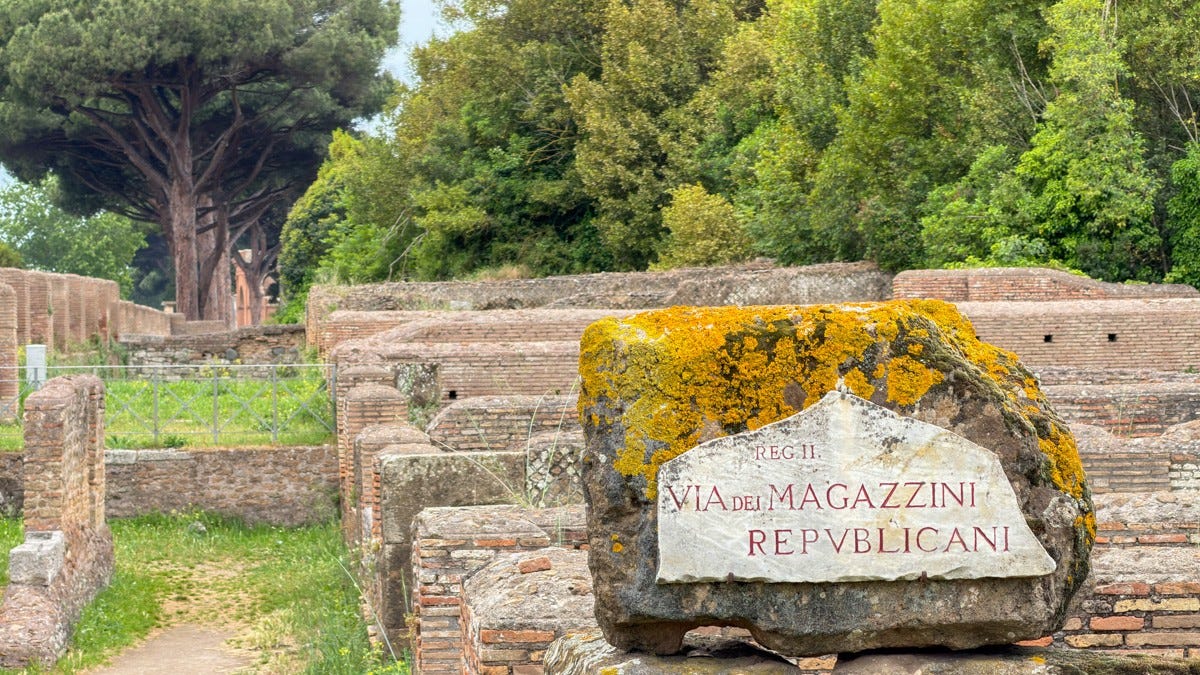
With a long layover in Rome, Allegra, Lily, Will, and I took a small excursion to Ostia Antica, the ancient port city that predates Imperial Rome. I was not expecting much. What we found was an extensive, prosperous, beautifully planned city. We saw expansive bathhouses, intricate mosaics, workshops, bakeries, an amphitheater, and housing both modest and grand. Walking through the ruins of a formerly thriving civilization, now silent, I was struck by the perspective every leader must eventually come to terms with. Great leaders plan for the present and prepare for what comes next. They build with creativity and welcome others’ contributions. And they hold the humility that what they build will not last forever, at least not in the form they built it. This newsletter tells three reminders, two thousand years old, for anyone trying to lead something that matters.
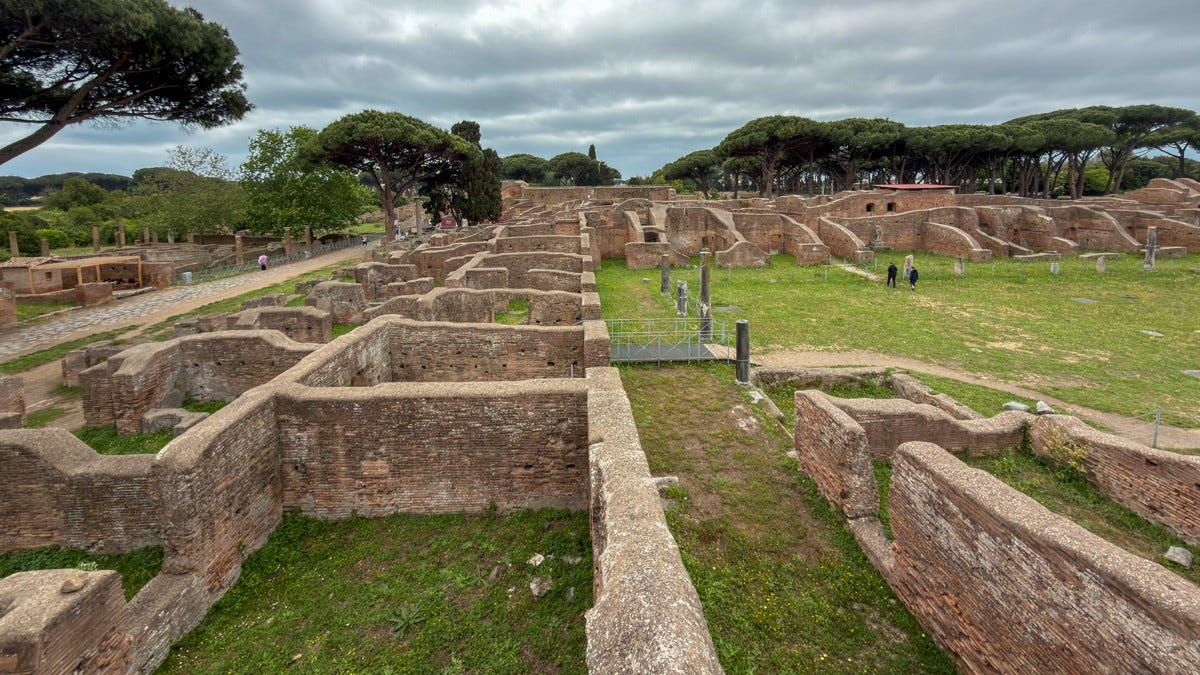
The planning of Ostia Antica was extraordinary. The streets followed a deliberate logic. Water moved through the city with intention and engineering that is still astounding. Goods came in and out through the port, people moved between neighborhoods, and the essentials of daily life were arranged with care. Every city has its planners, but here, with the people long gone, the planning itself was laid bare. What remained was the thinking of its leaders. So much of leadership is invisible when things are working. The structures, the systems, the small decisions that shape how people move through their days. We rarely see the planning behind a great team or a great organization. But when the noise quiets, what is left are the patterns someone designed with care, the choices that made the whole thing work. That is the real legacy.
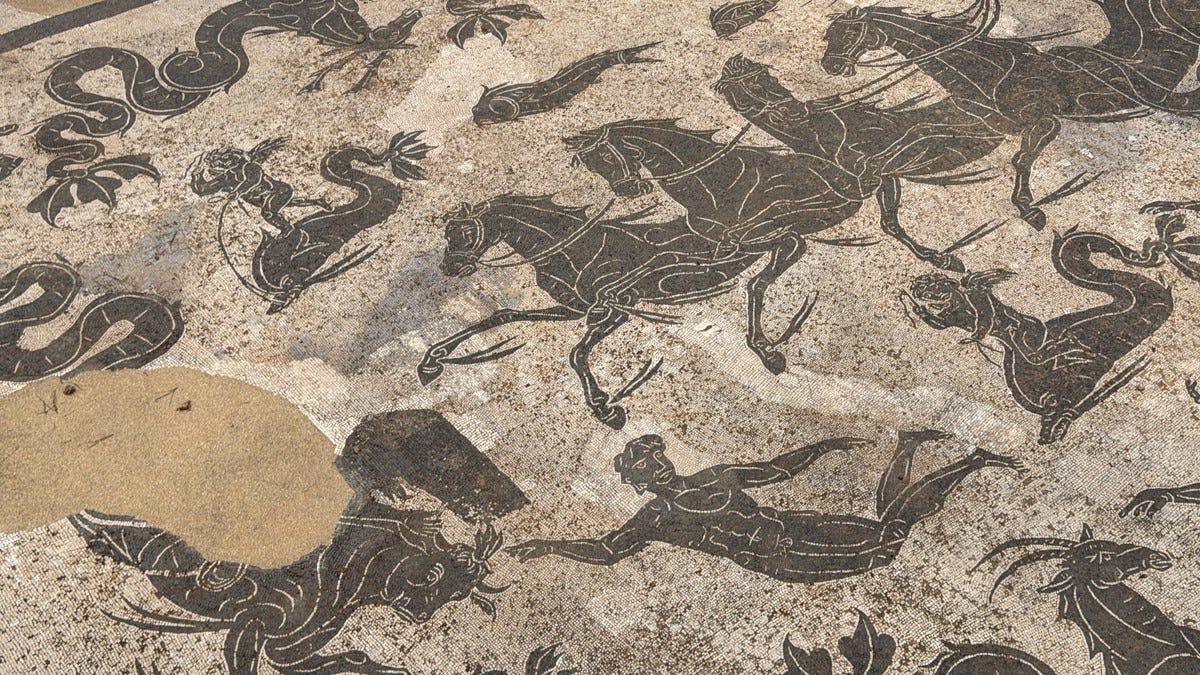
It would have been easy to build a city of pure function. Ostia did not settle for that. The mosaics in the homes of poets and playwrights were still vivid after two thousand years. The bath houses moved bathers through a deliberate sequence of cold and hot, designed for pleasure as well as cleanliness. The leaders understood that survival was not the same as flourishing, and that a city worth living in had to make room for beauty. Leaders today face the same temptation. Hit the numbers, meet the quarter, satisfy the market. The organizations people remember, the ones that endure in spirit and not just in revenue, are the ones that made room for creativity and joy alongside performance. They invested in the things that do not always show up on a spreadsheet. Thriving requires both, and the leaders who understand this build cultures people want to stay in.
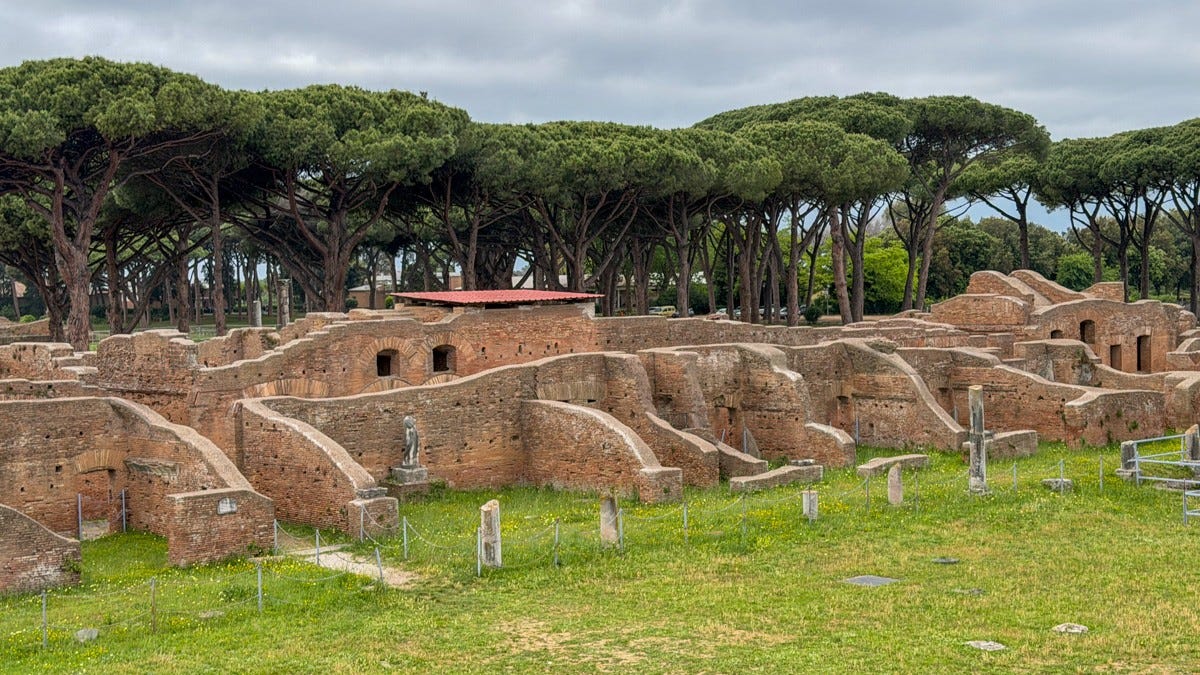
The final truth is inescapable. Ostia Antica ceased to exist long ago. Whatever the original leaders intended, the city now lives only as memory and stone. For me, this is the humility at the heart of leadership. No matter how wise we are, the future belongs to someone else. We build what we can today, lay the groundwork, and trust that those who follow will carry forward what serves them and let go of what does not. This is not resignation; it is liberation. We pour ourselves into the present, plan thoughtfully for what comes next, and release the rest. Holding too tightly to a future we cannot fully see drains energy from the work in front of us and from the people standing beside us right now.
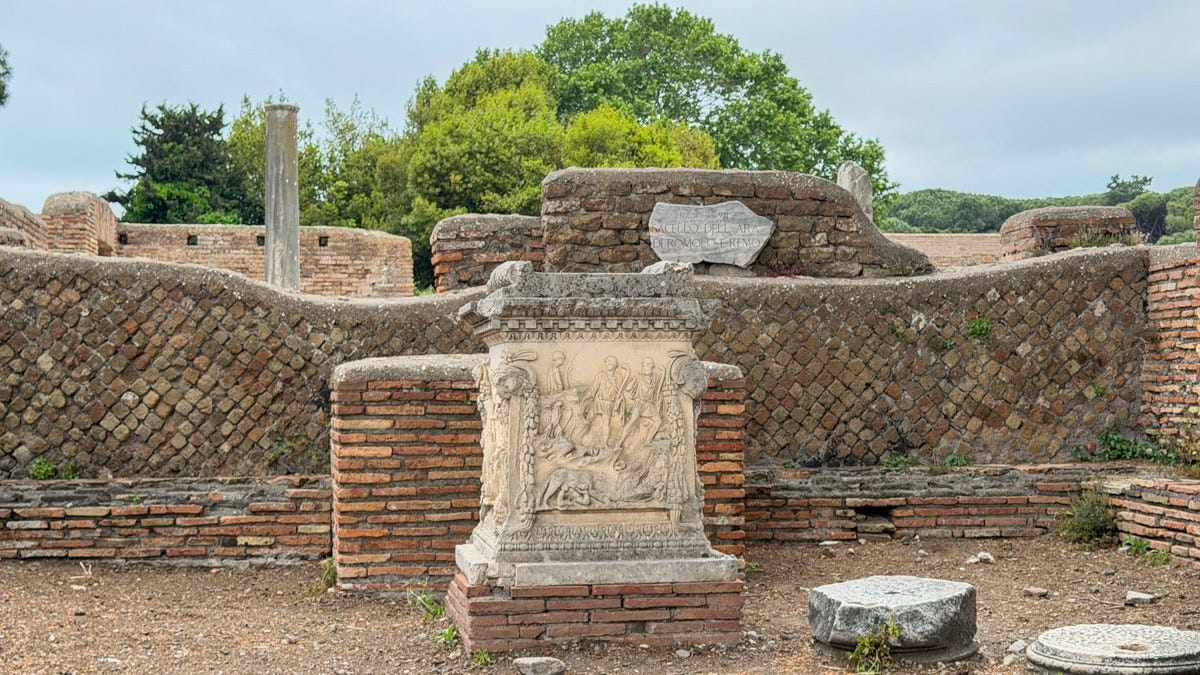
This trip is still in its early days, and already the sites we have visited are humbling. Walking through Ostia, surrounded by the quiet remains of a city that once buzzed with life, I felt the weight of what its leaders left behind, and what they could not. In life and leadership, we should aspire to greatness, to creating flourishing that reaches beyond our own time. And we must hold the humility to know that whatever lasting good we create will depend on those we develop and support along the way. For those we love and lead, this is the work. To do our best, to grow the people who will follow, and to keep our hands open to what comes next.

With love, gratitude, and wonder,
Scott

Winning with AI: The 90-Day Blueprint for Success by Charlene Li

Charlene Li has a new book out, at the right time. Winning with AI, written with Dr. Katia Walsh, takes on the question I hear most often from the leaders I work with: not what AI is, but what to actually do with it on Monday morning. What I appreciate is that Charlene and Katia refuse the usual framing. You don’t need an AI strategy, they argue. AI needs to serve the strategy you already have. That reframe alone is worth the read.
The book lays out a twelve-week path to move an organization from pilots to real value, drawing on lessons from more than fifty executives who’ve already done the work. For CEOs and senior leaders, the most useful part is the emphasis on prioritization, workforce readiness, and responsible governance, all treated as leadership work rather than technical work. If you’ve been waiting for a practical blueprint instead of another think piece, this is the one I’d put in your hands.
Leadership Intelligence: Science-Backed Strategies for Mastering 21 Everyday Management Challenges by Caroline Webb

Caroline Webb has spent three decades quietly becoming one of the most trusted advisors to senior leaders I know, and her new book Leadership Intelligence (Crown Currency, September 8) distills that work into something genuinely useful. Drawing on psychology, neuroscience, and behavioral economics—the same science-based approach that made How to Have a Good Day endure—Caroline organizes the work around three strengths: making wise choices, inspiring people to perform at their best, and building resilience through the inevitable ups and downs. The frameworks are practical enough to consult before a difficult conversation, substantive enough to sit with on a Sunday morning.
What I appreciate most is how Caroline holds the tension every senior leader actually lives in: deliver now, build for the long term, lift up to see the whole field, stay close enough to move with the team. Jonathan Haidt calls it “invaluable.” Marshall Goldsmith calls Caroline “one of the best leadership coaches in the world.” Both are right.
Which of those three strengths feels most worth your attention right now?
When an Executive Asks You an Unexpected Question by Melody Wilding, LMSW

Melody Wilding has a useful new piece in HBR on what’s really happening when an executive asks you an unexpected question. Her premise is one I see play out constantly with the leaders I work with: the senior person rarely wants the information they appear to be asking for. They want to know whether to worry, how to think about something, or what they personally need to do next. Melody calls these the three underlying needs — reassurance, guidance, and action — and once you can name which one is driving the question, the answer almost writes itself.
What I appreciate about her framing is how practical it is. Most of the executives I coach are technically excellent and still get tripped up here, because the instinct under pressure is to prove rigor by sharing more. Melody’s point is the opposite: read the need first, then answer to it. It’s a small shift with outsized influence. Worth a read, particularly if you’ve ever walked out of a meeting wondering what your boss actually wanted.
What’s the last unexpected question that caught you off guard?